

Loft Ladders and Energy Efficiency: What Homeowners Need to Know
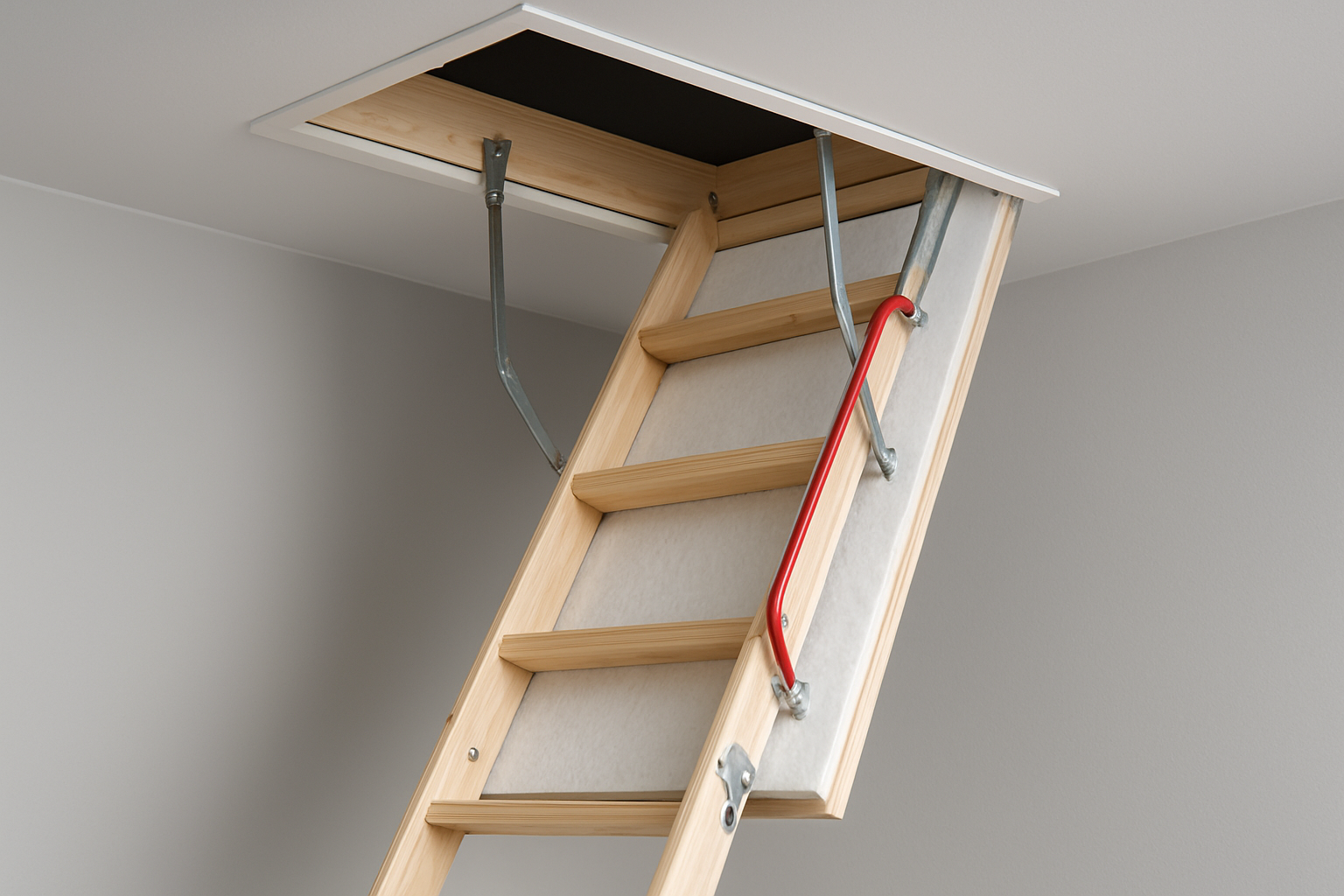
Heat loss through loft hatches is one of those home efficiency issues that rarely makes headlines but quietly drives up energy bills. A poorly sealed or uninsulated hatch can function like a permanently open window—allowing warm air to escape upward and cold air to seep down into living spaces.
The design and specification of loft ladders plays a direct role in how much heat your home retains, particularly in older properties where the loft hatch may be little more than a plywood panel dropped into a timber frame.
How Much Heat Is Lost Through an Uninsulated Loft Hatch?
The figures are more significant than most homeowners expect. According to the Energy Saving Trust, up to 25% of a home’s heat can be lost through the roof—and an uninsulated, draughty hatch contributes meaningfully to that figure. An uninsulated loft hatch of standard size can lose heat at a rate equivalent to leaving a small window open year-round.
Insulated loft ladder systems—those incorporating thermally efficient hatch covers with perimeter draught seals—can reduce this loss considerably, contributing to measurable reductions in heating costs over time.
What Makes an Insulated Loft Ladder Different?
Standard loft ladders include a basic hatch cover with no specific thermal properties. Insulated models feature:
A hatch cover constructed from materials with a low U-value (a measure of thermal conductivity)
A compressible perimeter seal that closes tightly when the hatch is shut
In some cases, a raised frame that creates additional insulation depth
Products meeting higher insulation standards will carry U-value ratings, allowing direct comparison with other building elements like windows and walls.
What Are the Most Common Questions About Loft Ladder Energy Efficiency?
What is a U-value, and why does it matter for loft ladder selection?
A U-value measures how much heat passes through a material per unit area. Lower U-values indicate better insulation. For loft hatches, a U-value below 0.5 W/m²K is considered energy-efficient.
Do all loft ladder systems include insulated hatches?
No. Standard models include basic hatch covers without thermal performance ratings. Insulated hatches are a specific product category and are typically priced higher than standard equivalents.
Is an insulated loft ladder worth the additional cost?
For homes with regularly heated living spaces below the loft and no existing insulation on the hatch, yes. The reduction in heat loss can contribute to meaningful long-term savings on heating bills.
How does a draught seal work on an insulated loft hatch?
The seal—typically a compressible foam or rubber strip—lines the perimeter of the hatch frame. When the hatch is closed, the cover compresses the seal, closing the gap between the cover and the frame and preventing air movement.
Can an existing loft ladder be upgraded with an insulated hatch?
In some cases, yes. A replacement insulated hatch cover may be compatible with an existing frame, depending on the dimensions. A professional installer can assess compatibility.
What is the expected improvement in heat retention after fitting an insulated loft ladder?
This depends on the existing level of loft insulation and the condition of the hatch being replaced. However, Energy Saving Trust guidance suggests that combined loft insulation measures—including hatch upgrading—can reduce heat loss through the roof by a significant margin.
Does an insulated loft hatch help with noise as well as heat?
Yes. The denser construction of an insulated hatch cover also provides a degree of acoustic benefit, reducing sound transmission between the loft and the living space below.
Are there any government incentives for upgrading to an insulated loft ladder?
Incentives vary by region and change over time. Homeowners in the UK may be eligible for support under schemes like the Great British Insulation Scheme. Always check current eligibility criteria with an approved installer or local authority.
Small Component, Big Impact
The loft ladder and hatch are easy to overlook when planning home energy improvements. Yet replacing an uninsulated, draughty hatch with a thermally rated alternative can make a genuine difference to a home’s thermal performance. For any homeowner focused on reducing energy bills and improving comfort, it’s a detail worth taking seriously.