
A school traffic light chart is a classroom display with green, amber and red zones, where each child starts the day on green and moves to amber or red as a gentle signal about behaviour. It borrows the idea of a road signal that everyone already understands. Used kindly and privately, it can help young children notice their own choices. Used harshly, it can shame them, which is why many schools now prefer other methods.
Quick facts
Green
Ready to learn. Every child begins here each morning.Amber
A reminder to pause and think. Not a punishment.Red
Time for a quiet talk with the teacher and a plan to fix things.Best age
Most useful from nursery to about class 4.Golden rule
Fresh start every day, and a clear path back to green.Food version
A separate idea that sorts snacks into eat often, sometimes and rarely.
How a school traffic light chart works
The chart has three coloured bands, one above the other, like a signal. Each child has a name peg, a small card or a clip. In the morning every clip sits on green.
- If a child keeps disturbing others after a quiet reminder, the clip moves to amber.
- If the problem continues, the clip moves to red, and the teacher talks to the child at a calm moment.
- When the child settles and makes a better choice, the clip moves back up.
Some teachers add a gold or star band above green for extra kindness or effort. The point is that movement goes both ways. Any traffic light behavior chart school teachers put up should never be a one way slide to red.
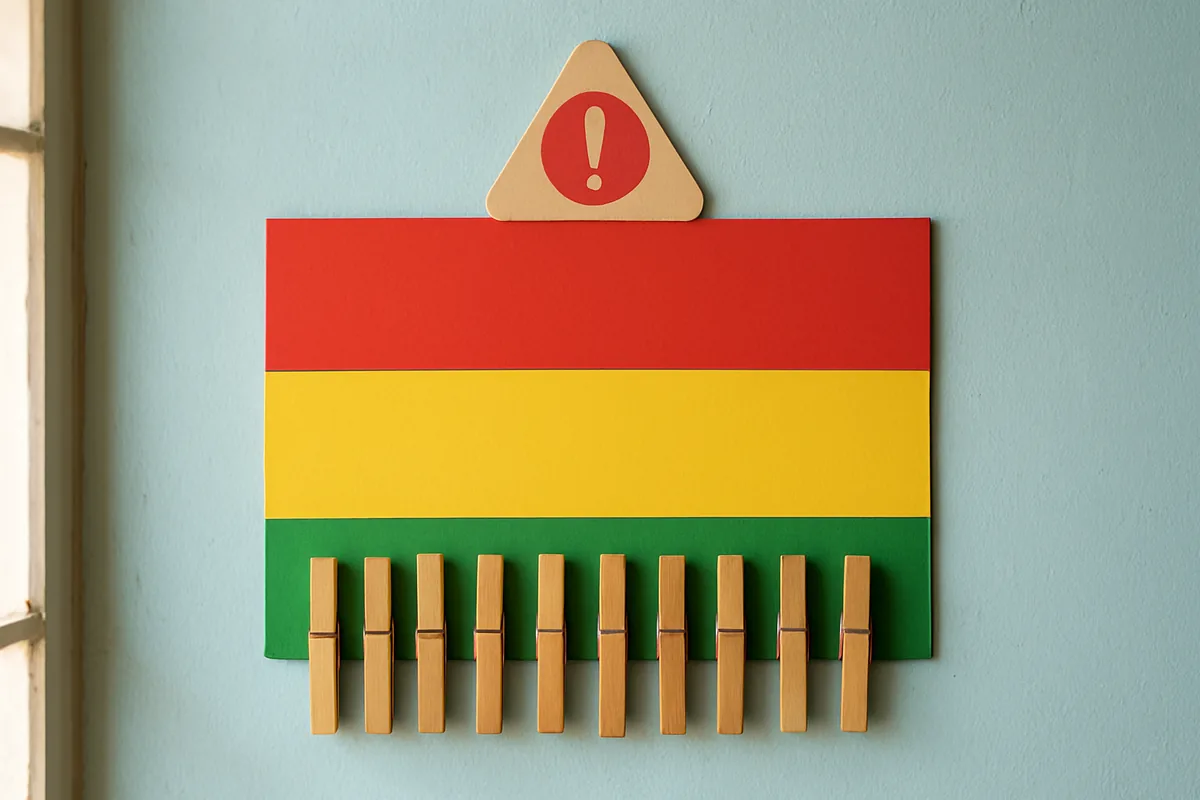
What each colour tells the child
| Zone | What it means | What the teacher does |
|---|---|---|
| Green | Following class rules, ready to learn | Notices and praises specific good choices |
| Amber | A warning, time to stop and think | Gives a quiet, private reminder of the rule |
| Red | The rule was broken again | Has a short calm chat, agrees a plan, may inform parents |
Keep the words on the chart positive. For green write "Ready to learn", for amber "Stop and think" and for red "Let us talk". Avoid words like naughty or bad.
Make your own chart in one evening
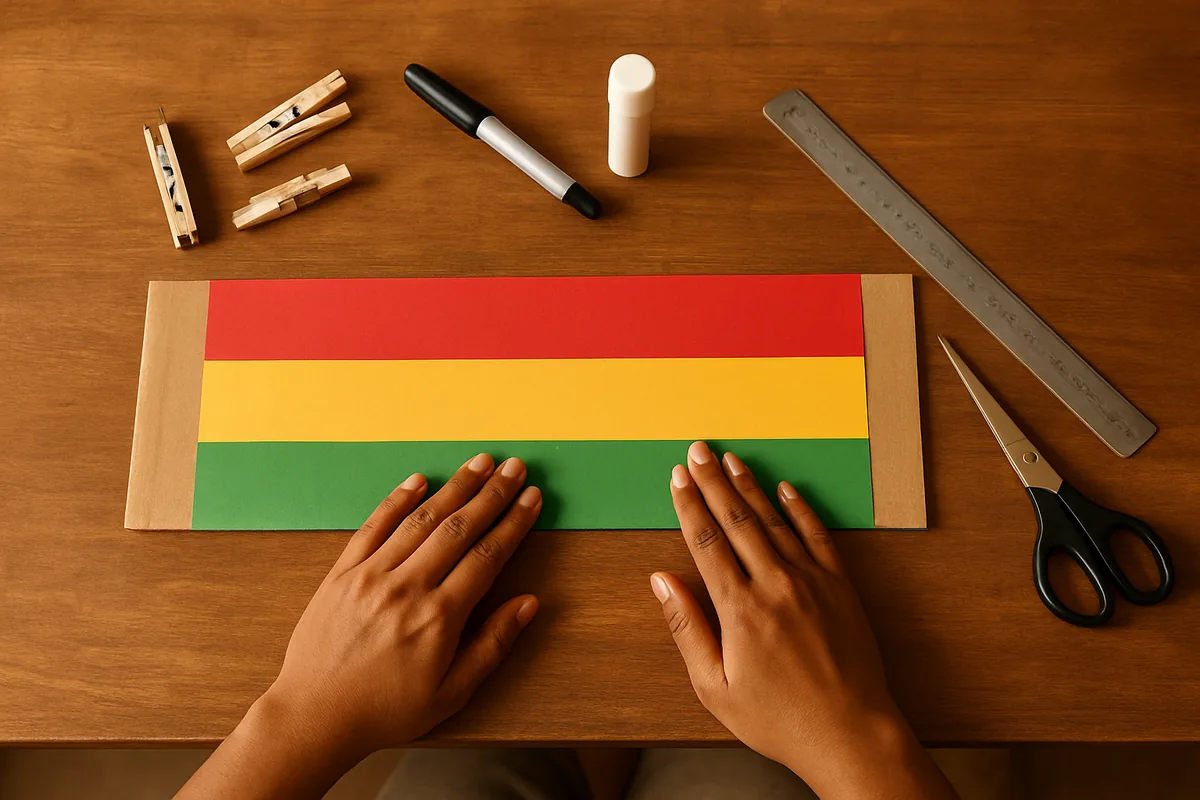
- Cut a strip of stiff cardboard about as long as your forearm and a hand wide.
- Cover it with three equal pieces of green, yellow and red chart paper, red at the top.
- Draw a black outline around the whole strip so it looks like a signal box.
- Write the short positive phrase on each band with a thick marker.
- Write each child's name or roll number on a wooden peg, or make paper clips with photos of animals instead of names.
- Stick the strip on the wall at a height the children can reach, so they can move their own peg back up.
A thin thermocol sheet behind the cardboard makes it sturdy. If you want the lights to glow, a simple LED version is explained on our traffic light project page.
Using it fairly
A school traffic light behaviour system works only if children trust it. These habits keep it fair:
- Reset daily. Every child starts on green the next morning, whatever happened today.
- Warn before moving. Give one quiet reminder before a peg moves.
- Talk in private. Never announce to the class who is on red.
- Move up often. Look for chances to move a peg back to green within the same period.
- Be consistent. The same action should lead to the same result for every child.
- Tell parents the good news too. A note home about a week on green matters as much as a note about red.
Why some schools are moving away from it
Many teachers and school counsellors have raised concerns about public behaviour charts:
- A child on red in front of the whole class may feel shame, and shame rarely changes behaviour.
- The same few children often end up on amber or red, so they stop trying.
- Quiet children who already behave get little from it.
- It focuses on the result, not on the reason a child is upset, tired or hungry.
None of this means the colours are bad. The problem is using them as a public scoreboard. If your school keeps the chart, use it privately and kindly, as described above.
Alternative to traffic light system in school
If you want to drop the public chart, these options keep the clear signal idea without the shame:
| Option | How it works |
|---|---|
| Personal colour card | Each child keeps a small three colour card on the desk and shows the teacher how they feel. |
| Whole class goal jar | The class earns marbles or paper stars together for good choices and gets a shared reward. |
| Feelings check in | Children point to a calm, worried or upset face picture at the start of the day. |
| Restorative chat | After a problem, the child and teacher talk about what happened and how to fix it. |
| Praise notes | The teacher writes short notes about good choices and sends them home. |
Many teachers mix two or three of these. The aim is to teach self control, not to rank children.
The food traffic light idea, in brief
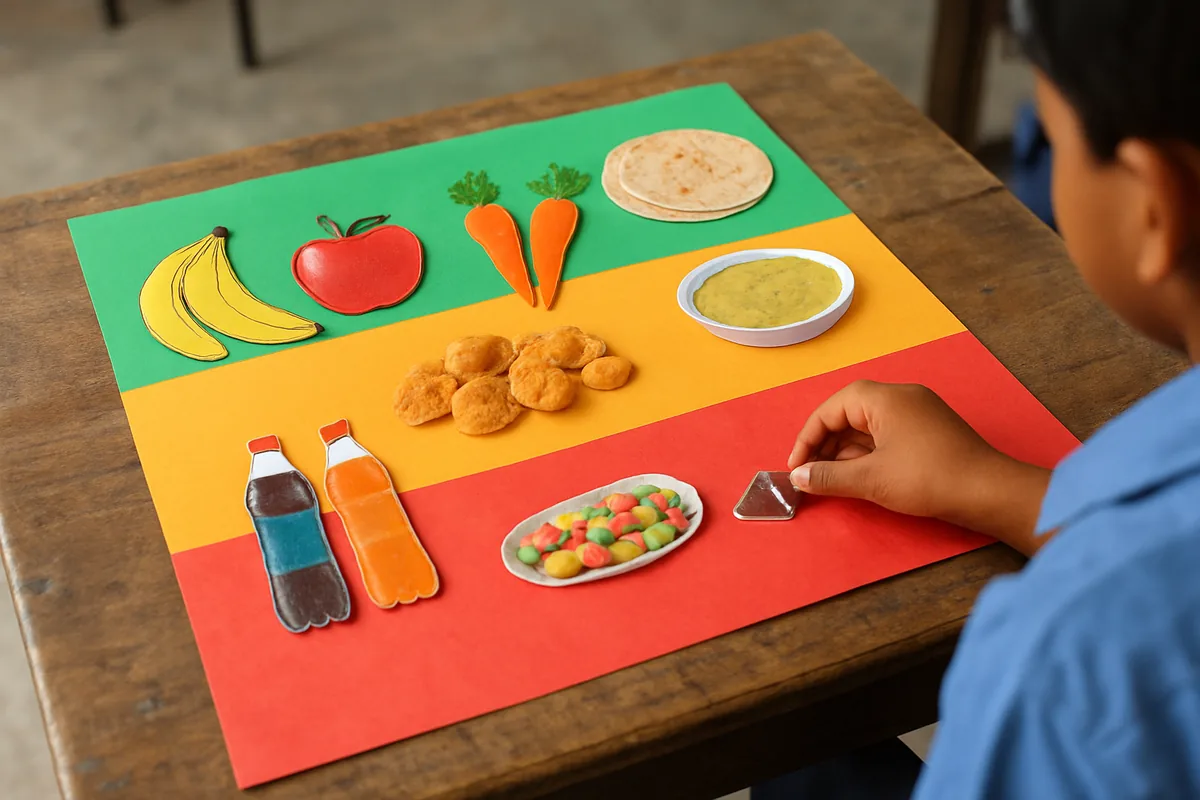
A school traffic light food chart is a different use of the same colours. It sorts foods by how often to eat them:
- Green: eat often, such as fruit, dal, vegetables, roti and curd.
- Amber: eat sometimes, such as fried snacks made at home or sweet biscuits.
- Red: eat rarely, such as sugary drinks, chips and very sweet mithai.
Children can draw or cut pictures of foods and stick them in the right band. It makes a good health week activity. Keep it simple and never label a child's lunch box as red in front of others.
Link it to road safety lessons
Because the chart already uses signal colours, it is an easy way into a road safety lesson. Ask children what the real lights mean, then show them a signal chart. Our guide to making a traffic rules chart covers signs and rules for the wall. There is also a page on signals at the school gate and the School Ahead sign that drivers see near the gate.
Questions people ask
What age is a traffic light behaviour chart best for?
It suits nursery to about class 4. Younger children like the clear colours and pegs. Older students usually respond better to talks, goals and self review.
Should a child ever stay on red all day?
No. A good chart always gives a way back to green after a better choice. Staying on red all day takes away the reason to try.
Can parents use the same chart at home?
Yes, a small fridge chart can work for routines like homework and bedtime. Keep it positive, reset it each day and praise moves to green.
What is the best alternative to a behaviour chart?
There is no single best option. Many teachers combine a whole class goal jar with private chats and praise notes. Choose what fits your class and is easy to keep up.
Is the food traffic light chart the same thing?
No. It uses the same colours to show how often to eat certain foods. It is about health, not behaviour.